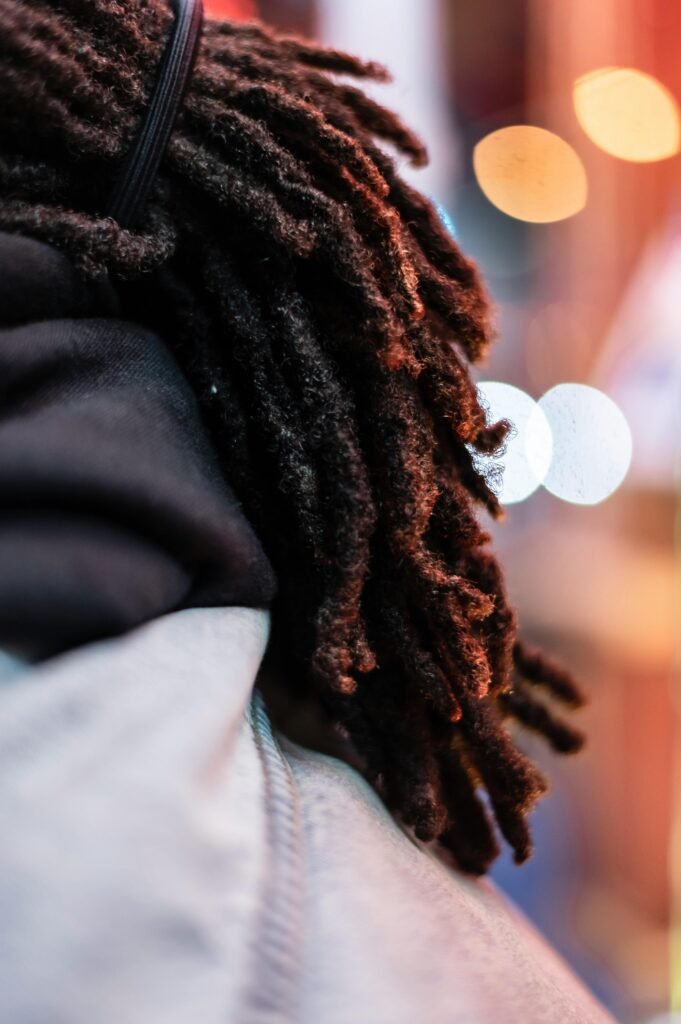
When someone sits in my chair and begins their loc journey, one of the first conversations we sometimes have isn’t about parts, sizing, or maintenance.
It’s about language.
“Do you call them dreadlocks or locs?”
For some people, the terms are interchangeable. For others, the difference matters deeply. As someone who is proud of my Black heritage and passionate about helping people begin and maintain healthy locs, I believe understanding the conversation is just as important as understanding the hairstyle itself.
And truthfully, while I primarily use the term locs on my website and in my branding, I also say dreadlocks from time to time. The more I’ve learned about the history and meanings behind both terms, the more I appreciate that this conversation isn’t black and white. It’s personal, cultural, and sometimes even spiritual.
More Than a Hairstyle
Locs are not new.
Long before social media, celebrity trends, and modern natural hair movements, forms of locked hair could be found throughout Africa and among cultures around the world. Historical evidence of locked hairstyles appears among ancient Africans, including in Egypt, and among various East African communities.
Locs have carried meanings connected to spirituality, identity, status, resistance, beauty, and cultural pride.
For many people of African descent, locs represent something much deeper than a hairstyle. They can symbolize self-acceptance, cultural connection, freedom from Eurocentric beauty standards, and a commitment to embracing natural hair in its healthiest state.
For some, locs are simply a hairstyle. For others, they are a lifestyle, a spiritual practice, or a visible expression of who they are.
Where Did the Word “Dreadlocks” Come From?
This is where the conversation becomes interesting.
There are several theories about the origin of the word “dreadlocks.”
Some historians connect the term to the Rastafari movement in Jamaica, where “dread” referred to a reverence, awe, and fear of God—not fear in a negative sense, but a deep respect for the Divine. Within that understanding, some people view dreadlocks as “God locks,” hair worn in devotion, spiritual awareness, and connection to the Creator.
Others suggest the word developed because outsiders viewed the hairstyle with fear or considered it “dreadful.” There are also theories linking the term to colonial descriptions of African freedom fighters and Black communities who wore their hair in locked styles.
Because of these different interpretations, people have different feelings about the word today.
Why Many People Prefer “Locs”
Many members of the Black community choose to simply say “locs.”
Why?
Because the word “locs” describes the hairstyle without attaching ideas of fear, negativity, or judgment.
For many, the word feels cleaner, more affirming, and more aligned with the beauty and significance of the style itself.
When someone says “locs,” they are often centering the hairstyle rather than historical perceptions of it.
That doesn’t mean everyone who uses the word “dreadlocks” is wrong. It simply means that many people have intentionally chosen language that better reflects how they see themselves and their hair.
Why Some People Still Embrace “Dreadlocks”
At the same time, many people proudly use the term dreadlocks and see it as a powerful expression of culture, spirituality, and identity.
When understood through the Rastafarian perspective, “dread” can represent reverence for God, spiritual discipline, and a commitment to living according to one’s beliefs. In that context, the term carries honor rather than negativity.
I’ve even heard the phrase “God Locks,” and I have to admit—that perspective is deep.
When viewed through that lens, dreadlocks become more than a hairstyle. They become a reminder of one’s relationship with God, one’s spiritual journey, and one’s commitment to walking in purpose.
For that reason, I respect the term dreadlocks as much as I respect the term locs.
A Symbol of Identity and Resistance
Throughout history, Black hair has often been politicized.
Natural hairstyles have been labeled unprofessional, distracting, or unacceptable in spaces that were built around Eurocentric standards of beauty. Yet generation after generation, Black people have continued to embrace their natural hair and wear it proudly.
Locs became a visible expression of identity, self-determination, and cultural pride across the African diaspora. From Jamaica to Ghana, from Kenya to the United States, locs have been worn by artists, activists, educators, spiritual leaders, and everyday people who simply wanted to embrace their natural selves.
Whether someone calls them locs, dreadlocks, or even God Locks, the hairstyle continues to represent resilience, beauty, and authenticity.
At The Loc Stone
At The Loc Stone, you’ll hear me use the word locs most often.
Not because I want to tell anyone else what they should call their hair, but because it reflects how I view this beautiful journey.
I see locs as intentional.
I see them as healthy.
I see them as versatile.
I see them as a connection to culture, history, and self-expression.
Most importantly, I see them as yours.
But I also respect those who choose the term dreadlocks because of its spiritual significance, cultural roots, or personal meaning.
My goal isn’t to tell anyone which word is right.
My goal is to encourage people to learn the history, understand the different perspectives, and then choose the language that resonates most with them.
Whether you’re considering microlocs, beginning your first set of traditional locs, or maintaining a mature loc journey, I believe education is just as important as technique.
The more we understand the stories behind our hair, the more empowered we become to wear it proudly.
Final Thoughts
The conversation around “locs” versus “dreadlocks” isn’t really about winning an argument.
It’s about understanding history, respecting different perspectives, and appreciating the cultural significance behind a hairstyle that means so much to so many people.
Whatever term you choose, remember this:
Your loc journey is uniquely yours.
Wear it with pride.
Wear it with confidence.
Wear it with knowledge.
And wear it knowing that our hair has always been beautiful.
